The Complete Guide to Dental Implants in the Krayot – From Diagnosis to Your New Smile
Tooth loss, quality of life and the evolution of modern implants
Losing one or more teeth affects much more than appearance: it impairs chewing, speech, self-confidence and jawbone health. Without a tooth, the bone in the area gradually resorbs – a process that complicates future implant placement and alters facial structure. Dental implants in the Krayot and the north of Israel are now the leading solution for restoring function and aesthetics: a dental implant – a titanium fixture – acts as an artificial root for a crown, bridge or fixed prosthesis. Modern technology has made the procedure predictable, safe and with a high success rate. Dental implants in Haifa and the Krayot are offered by clinics that combine 3D imaging, digital planning and advanced restorative materials – so the final result looks natural and stays stable for years.
Dr. Tal Itskovich leads the entire oral rehabilitation process in the Krayot at our clinic – a dentist with extensive experience in implants and aesthetic rehabilitation. Dr. Tal Itskovich performs dental implants and oral rehabilitation himself, from treatment planning through to fitting the final crown or bridge. For complex surgical cases – for example when bone grafting or a sinus lift is required – an oral and maxillofacial surgeon works at the clinic. Having an oral and maxillofacial surgeon on site ensures the highest level of surgical safety and clinical success even in challenging anatomical situations. You are welcome to book a consultation at our dental clinic in the Krayot.
The advantage of the combination: restorative lead and oral surgeon under one roof
When it comes to dental implants and full-mouth rehabilitation, the close collaboration between the restorative dentist and the oral and maxillofacial surgeon is a critical advantage. Dr. Tal Itskovich leads the whole process: he is responsible for the aesthetic plan, implant positioning for the future restoration, and fitting the crowns and bridges – materials such as zirconia and E-max – so the smile looks natural and functions fully. When a complex surgical procedure is needed, an oral and maxillofacial surgeon at the clinic performs bone grafting, sinus lift and implants in demanding anatomical situations. Coordination between them takes place in the same clinic: no external referral, full medical information, and implant position chosen to match the final restoration exactly. The result – maximum safety, predictable healing and a long-term aesthetic and functional outcome.
Diagnostics and planning: 3D CT and personalised digital treatment plan
The first step in any implant plan is a 3D CT scan of the jaw area. The scan provides an accurate picture of bone volume and density, nerve and vessel position, available bone height and width, and sinus anatomy in the upper jaw. Based on this data, a personalised digital treatment plan is built: where to place each implant, at what angle and depth, to ensure maximum stability and avoid injury to the nerve or sinus. Advance planning reduces complications, shortens surgery time and allows the patient to see the treatment path and expected outcome in advance. At our clinic every patient receives a tailored plan – with no shortcuts – to ensure a safe, long-term result.
The full process: from implant placement through osseointegration to restoration
Implant placement and osseointegration
According to the plan, the implant is placed under full local anaesthesia – or under sedation for those who prefer a calmer experience. The dental implant, a biological titanium fixture, is inserted into the jawbone. In the following period – usually three to six months, depending on site and bone condition – the bone bonds to the implant in a biological process called osseointegration: the bone grows around the implant and makes it part of the structure. Only when the implant is sufficiently stable do we move to the restoration phase – fitting the abutment and crown or bridge. Your personal plan will explain the exact timeline and what to expect at each stage.
Final restoration – zirconia and E-max crowns
Oral rehabilitation in the Krayot at our clinic is carried out with advanced materials: zirconia and E-max crowns, metal-free, with a natural look, translucency and high strength. Dr. Tal Itskovich matches the colour, shape, size and position of each crown so the smile looks natural and functions like healthy teeth. The result – full function, long-term durability and aesthetics that blend with the face and gums.
Bone grafting and sinus lift – when bone volume is lacking
Not every patient has sufficient bone volume and density. Years without a tooth, advanced gum disease, past extractions or unique anatomy can lead to bone loss. In such cases a preliminary bone-building stage is required. Bone grafting – filling the deficit with synthetic or autogenous bone (from the patient) – creates a stable base for the implant. Sinus lift is used in the upper jaw in the molar region: the floor of the maxillary sinus is gently raised, the space is filled with bone graft material, and bone volume is created that allows implant placement in an area that would otherwise have insufficient bone. These procedures are performed at our clinic by an oral and maxillofacial surgeon, with precise planning and predictable outcomes. Thus dental implants in the Krayot and Haifa are possible even in situations that were once considered complex – with a high success rate and no need for alternative solutions.
Implants and aesthetics – how you get a natural, functional smile
Dr. Tal Itskovich leads the restoration phase and ensures the final crown or bridge looks and functions like natural teeth. Colour selection is matched to adjacent teeth and gum shade; crown shape is adapted to the bite and jaw movement to avoid overload and maintain implant stability. Zirconia and E-max materials allow translucency and a vital appearance – without a "metal line" at the gum – and high wear resistance. The result: a harmonious smile, full function and the ability to eat, speak and smile with confidence for years.
The patient experience – a calm environment and a pain-free approach
The implant is placed under full local anaesthesia, so there is no pain during the procedure. After it wears off there may be mild discomfort or swelling for a few days – managed with pain relief and simple instructions (cold compresses, rest, avoiding exertion). Most patients report that discomfort is less than expected. The clinic emphasises a calm, reassuring environment: detailed explanations before each step, a pace that suits the patient and the option of sedation for those who want it. Patients with dental anxiety receive special attention. The goal – that you arrive feeling secure and leave with a new smile and confidence in the result.
Long-term care – how to look after your implants
Dental implants last for many years – sometimes for life – provided you maintain good hygiene and follow-up. Daily brushing, floss or interdental brushes, and regular hygienist visits help prevent gum disease and bone loss around the implant. Periodic check-ups with the dentist to assess stability and bite are also recommended. With proper care, oral rehabilitation in the Krayot on implants remains stable, functional and aesthetic for decades.
Frequently asked questions – dental implants in the Krayot
How much does a dental implant cost in the Krayot?
Is the procedure painful?
How long does recovery take?
Can I smoke after a dental implant?
What is the difference between a standard implant and a sinus lift?
How long do implants last?
Is there an oral and maxillofacial surgeon at the clinic?
When is the crown fitted after the implant?
Are implants suitable for older adults?
How do I book a consultation and treatment plan?
Personal consultation and CT-based treatment plan
Every patient is different – number of implants, bone condition, aesthetic needs and budget. We invite you for a consultation at the clinic: we will examine you and discuss options, and as appropriate recommend a CT and a tailored treatment plan. Dr. Tal Itskovich’s clinic is at 36 Aharon Street, Kiryat Motzkin – easy to reach from Haifa, Kiryat Haim, Kiryat Yam and Kiryat Bialik.
Related articles: Dental implants, Oral rehabilitation, Dental aesthetics and veneers.
For a personal CT-based treatment plan – call or leave your details in the contact form.
About the author
About the author
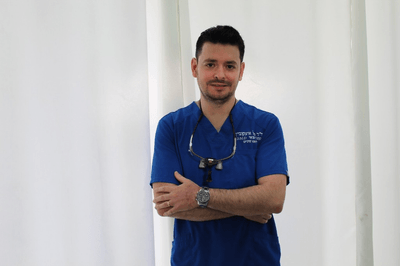
Dr. Tal Itskovich
Dentist · Oral rehabilitation & implants · Kiryat Motzkin
Dr. Tal Itskovich, dentist with over 15 years of experience in dental implants, aesthetic dentistry and oral rehabilitation. Clinic director in Kiryat Motzkin, with a particularly gentle approach for anxious patients.
Meet Dr. Tal Itskovich →