Dental implants abroad or in Israel? Dentist in Haifa & the Krayot explains
More and more patients are tempted by attractive offers for dental implants abroad. Before making such a significant medical decision, it is important to understand the full process – diagnosis, surgery, healing and follow‑up – and to know the advantages of being treated by a local dentist in Haifa and the Krayot who can accompany you for years.
1. Implants are a process, not a single treatment
Professional dental implants are not a one‑time action, but a multi‑step process: diagnosis with X‑rays and CT, careful planning of the number and position of implants, the surgical phase – sometimes with bone grafting – and only then the final restoration with crowns and bridges. A local clinic in Kiryat Motzkin connects all these stages under one roof, with the same team following you throughout.
2. Who is responsible if something goes wrong?
Even when treatment is planned carefully, complications can occur – infection around an implant, pain, a crown that breaks or a restoration that needs adjustment. When the treatment is done in Israel, you have a clear address: you call the clinic and come in for an examination and imaging. With treatment abroad the dentist who knows your case is in another country, and often the local dentist in Haifa and the Krayot has to try to understand what was done and how to fix it.
3. Cheap or expensive? The real cost of treatment
On paper, implant prices abroad may look much lower. But to the treatment cost you must add flights, accommodation, local transport, time off work and sometimes a second trip for corrections. If problems arise back home, repair or repeating the treatment can be complex and costly. In many cases, when you calculate the full picture, the difference between treatment abroad and treatment at a quality clinic in the Krayot is much smaller than it first seems.
4. Medical standards, equipment and sterilisation
In Israel, dental clinics operate under the supervision of the Ministry of Health and strict rules on hygiene, documentation and licensing. In a well‑known clinic in Haifa or the Krayot you can check recommendations, see the clinic with your own eyes and ask which implant systems and materials are used. Abroad it is harder to know who supervises the clinic, which exact implants are being placed and what really happens behind the scenes in the sterilisation room and dental laboratory.
5. Language, explanations and understanding the process
For such a significant treatment you should understand exactly what is planned: how many implants, what alternatives exist, what the recovery looks like and what to do if something hurts. In a local clinic you can ask all your questions in your own language and receive clear explanations until everything is understood. In treatment abroad, explanations are often given in a foreign language or basic English, and many patients later admit that they did not really understand all the details before signing.
6. What happens after you return home?
Implants require long‑term maintenance: proper brushing, cleaning between the teeth, hygienist visits and periodic X‑rays to rule out inflammation around the implants. The crowns and bridges may also need adjustment or replacement after some years. When the entire process is done in one local clinic, the team knows exactly what was placed and how. When the surgery was done abroad, it is not always possible to obtain the original parts or full documentation, and sometimes the only practical solution is to redo the restoration.
7. Big promises in ads versus reality
Marketing messages about a “new smile in one day” or “implant package at a special price” sound very appealing. But good dentistry is measured not only by the first photo after treatment, but by comfort, functionality and durability over many years. A local dental clinic that serves Haifa and the Krayot thinks in long‑term relationships with patients, not in one‑time projects, and therefore plans treatment with the coming years in mind.
8. Are there situations where treatment abroad makes sense?
There are indeed situations where treatment abroad can be considered – for example for someone who lives most of the year in another country and has continuous access to the same clinic there. Even then, it is important to ask tough questions: who is responsible in the long term, how will you receive urgent care if something happens while you are in Israel, and will all documentation and materials be available if a dentist in the Krayot needs to continue the treatment later.
9. The advantage of a local clinic in Haifa and the Krayot
Choosing a clinic in Kiryat Motzkin allows you to combine high professional standards with availability close to home. You can come for consultation, receive a second opinion and make a decision at your own pace, without pressure from flight dates. In Dr. Tal Itskovich’s clinic the surgical and restorative planning is coordinated, and the same team – dentist, surgeon, hygienist and laboratory – accompanies you throughout.
10. Summary – how to decide about dental implants abroad
Before you commit to dental implants abroad, stop and ask yourself whether you know who will treat you, who will be there for you if something goes wrong later and whether you have also checked an option with a dentist in Haifa and the Krayot. In many cases a carefully planned treatment in a local clinic provides more peace of mind and stability in the long term than a supposedly cheap package deal abroad.
Book an implants consultationRelated articles: Dental implants in Kiryat Motzkin and the Krayot, Full mouth rehabilitation – crowns and bridges, What you should know about dental implants, Immediate loading and same-day implants.
About the author
About the author
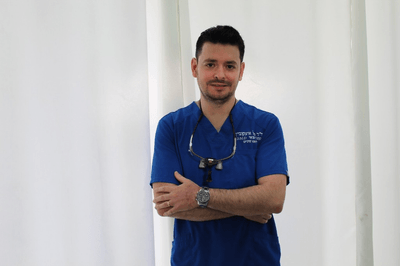
Dr. Tal Itskovich
Dentist · Oral rehabilitation & implants · Kiryat Motzkin
Dr. Tal Itskovich, dentist with over 15 years of experience in dental implants, aesthetic dentistry and oral rehabilitation. Clinic director in Kiryat Motzkin, with a particularly gentle approach for anxious patients.
Meet Dr. Tal Itskovich →