Dental X‑rays – which image do you really need, and when?
In a regular dental check-up we see only what is above the gums and in direct view. A large part of the tooth, bone and roots is hidden – and this is where dental X‑rays come in. Our goal is not to “take as many X‑rays as possible”, but to obtain exactly the information we need – with minimal radiation and unnecessary hassle for you.
1. Why do we need dental X‑rays at all?
Dental X‑rays help us detect hidden cavities between teeth, assess roots and bone (inflammation, cysts, bone loss), plan complex treatments such as implants, surgical extractions and orthodontics, and monitor treatment success over time. Without imaging we sometimes have to guess – and we prefer to make decisions based on facts.
2. The main types of dental X‑rays
Bitewing X‑ray – a small digital X‑ray where you bite on a small plate, usually near the molars. It is excellent for detecting cavities between teeth and assessing restorations and bone height between teeth. Used mainly in routine check‑ups. Radiation is very low and the cost is usually modest.
Periapical X‑ray – a focused image that shows the entire tooth from crown to root tip, including the surrounding bone. Suitable for pain from a single tooth, before root canal treatment, before extraction or for follow‑up. Radiation is still relatively low and the price similar to a bitewing.
Panoramic X‑ray (OPG) – a large image that shows both jaws, joints, sinuses and neighbouring structures. It gives an overall picture of the mouth: impacted teeth, large areas of infection and bone status. Often used before implants, complex extractions or for general assessment. Typical cost is higher than a small film but still reasonable.
Dental CT (CBCT) – a focused three‑dimensional scan of the jaws. It allows accurate assessment of bone height and width, position of nerves and sinuses and complex pathology. Used for planning implants when bone is limited, before complex surgery or for detailed assessment of cysts and other findings. Radiation is higher than standard images so we reserve it for cases where it truly adds value.
Cephalometric X‑ray – a side‑view image of the head, common in orthodontics. It shows the relationship between jaws, teeth and facial skeleton and growth direction. Used mainly before and during clear‑aligner or traditional orthodontic treatment.
3. Are dental X‑rays dangerous?
Modern systems are digital and the dose from dental X‑rays is significantly lower than in the past. Still, we treat each X‑ray seriously and follow the principle: <strong>as little radiation as reasonably possible, without compromising diagnosis</strong>. We take X‑rays only when clinically justified, choose the image type that gives the most information with the lowest dose, and use shielding when appropriate.
4. Pregnancy – what should you know?
If you are of child‑bearing age, pregnant or might be pregnant, please tell us in advance. Whenever possible we postpone non‑urgent images until after pregnancy. When there is an urgent need – severe pain, swelling or abscess – a small, focused X‑ray may actually prevent far more serious complications. In such situations we use the minimal type of X‑ray needed, with cautious protocols and proper shielding.
5. Our clinic’s approach – only what is needed, as conveniently as possible
At our clinic we believe in taking exactly the X‑rays that are required – and no more. We never send patients “for X‑rays just in case”. Each image is taken only if it changes diagnosis or treatment planning. Small intra‑oral X‑rays (bitewing / periapical) are usually taken on site with digital sensors and low doses in just a few minutes. When a panoramic X‑ray, dental CT or cephalometric image is required, we work with several imaging centres close to the clinic as well as in Haifa and the Krayot for maximum accessibility.
To avoid unnecessary trips, our receptionist – following the dentist’s instructions – often sends the referral for imaging in advance via WhatsApp, so by the time you arrive most of the information is already available and you do not have to go back and forth.
6. How often should dental X‑rays be repeated?
In many situations we can rely on existing X‑rays, but if they are more than a year old – especially when planning new treatment – we will often recommend updating them. If there has been a major change during the year (new pain, swelling, fracture, extensive gum changes), we may need a fresh image even if the previous one seems “recent”. For routine check‑ups without complaints, such as bitewings, repeating them every few years is often enough – depending on age, caries risk and general oral health.
Our rule of thumb: when there is not enough information to make a safe decision, we choose the single most appropriate X‑ray that will clarify matters – starting from the smallest, most focused option and reserving 3D CT for complex cases.
7. Which image is needed in which situation? – Examples
8. What does it cost – and when is it really worth it?
Prices vary between insurance plans and imaging centres, but broadly: small intra‑oral X‑rays (bitewing, periapical) cost relatively little, while panoramic X‑rays and CBCT scans are more expensive. The key question is not only “how much does the image cost”, but whether it helps avoid pain, guesswork or unnecessary treatment later. In many cases, a timely X‑ray prevents much more complex and costly problems in the future.
9. Summary – how we avoid unnecessary X‑rays
We discuss, examine and explain before referring you for imaging. We match the type of X‑ray to your exact situation – no more and no less – use modern digital systems with low doses and rely on existing images when they are still up to date. At the same time we do not hesitate to repeat imaging when too much time has passed or your condition has changed significantly.
If you have previous X‑rays, questions about a test that was recommended or concerns about radiation, we are here to explain, reassure and choose together the safest, most accurate path for you.
Book a consultation and personalised dental X‑ray planמאמרים קשורים: דלקות חניכיים ופריאודונטית, מה חשוב לדעת על השתלת שיניים?, טיפולי שיניים בהריון, מה מותר ומה לא, שיננית ומניעת עששת, טיפולי חירום ועזרה ראשונה.
About the author
About the author
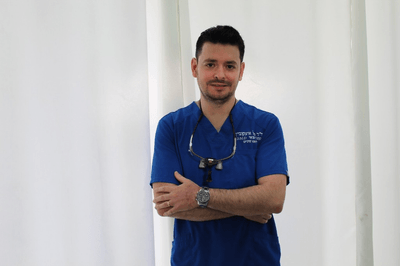
Dr. Tal Itskovich
Dentist · Oral rehabilitation & implants · Kiryat Motzkin
Dr. Tal Itskovich, dentist with over 15 years of experience in dental implants, aesthetic dentistry and oral rehabilitation. Clinic director in Kiryat Motzkin, with a particularly gentle approach for anxious patients.
Meet Dr. Tal Itskovich →